Home Blog Page 68

Somaliland Courts International Investors at UAE-Africa Summit

0

By Goth Mohamed Goth

At the UAE–Africa summit on Tuesday, Somaliland President Abdirahman Mohamed Abdillahi Irro urged international investors to bring capital into the self-declared republic, emphasizing his government’s commitment to fostering a business-friendly environment.

President Irro stated that Somaliland is seeking investments in energy, electricity, maritime and blue economy industries, artificial intelligence, mining, and agriculture. He described the country as “a land of opportunity, an untapped market ready for investment.”

To demonstrate progress, he highlighted existing partnerships, specifically citing the Dubai-based DP World’s modernization of Berbera Port, the creation of a free trade zone, and the construction of a corridor linking Berbera to Ethiopia. Irro praised the company for making what he characterized as the largest foreign investment in Somaliland’s history.

DP World Chairman Sultan Ahmed bin Sulayem endorsed Somaliland’s potential, pointing to its strategic location along major global trade routes and its proximity to Ethiopia, a landlocked nation heavily dependent on seaports. He noted that significant investment has established Berbera as one of the leading ports in the Horn of Africa.

Irro also highlighted Somaliland’s political history, noting that it declared independence before other regional states and remains the only part of the former union with Somalia to have directly elected its president.

This appearance marked President Irro’s second time at an international investment forum in the United Arab Emirates as his administration continues to seek foreign capital for infrastructure and economic growth. Somaliland has functioned as a de facto independent state since 1991 but has not gained international recognition.

Somaliland UK Mission Hosts Groundbreaking Diaspora Summit Celebrating Unity and Advancement

0

On September 29, 2025, a landmark event unfolded in London, orchestrated by the Somaliland UK Mission with the patronage of esteemed envoy Hon. Said Hassan Bihi and a team of dedicated Mission diplomats.

The gathering welcomed Second Deputy Speaker Ali Hamud Jibril, former government officials, and a diverse array of invited guests, alongside an enthusiastic Somaliland diaspora community. This pivotal summit centered on promoting Somaliland’s pursuit of self-determination, fostering socioeconomic growth, and deepening its partnership with the United Kingdom.

The event buzzed with energy as leaders and community members participated in robust dialogues about investment prospects, political cooperation, and innovative strategies to secure Somaliland’s bright future.

Highlighting Somaliland’s economic strides, the summit showcased the nation’s GDP, which soared to $3.97 billion in 2023—a 5% rise from the previous year, according to the Central Statistics Department. This growth underscores Somaliland’s enduring resilience and untapped economic promise.

The Somaliland flag, prominently displayed, stood as a potent emblem of the collective aspiration for stability and prosperity, reflecting the nation’s 34-year journey of democratic development since its 1991 reclamations of independence.

The diaspora emerged as a cornerstone of this progress, channeling significant remittances and expertise to bolster sustainable development. The event also spotlighted ongoing UK-backed initiatives, including transformative infrastructure projects launched since 2020, such as road improvements and enhanced water systems, which are uplifting communities across Somaliland.

Hon. Said Hassan Bihi conveyed heartfelt thanks to all participants and UK allies, declaring, “Together, we are not merely envisioning a brighter future—we are actively constructing it.” This summit strengthens Somaliland’s international footprint and reaffirms the diaspora’s critical role in forging a prosperous tomorrow.

Hon. Jibril shared insights from his recent tour of Nordic and Benelux capitals, where legislators expressed preliminary support. Should this support materialize into policy, it could prompt the EU’s External Action Service to prioritize Somaliland in regional discussions, potentially paving the way for new trade and development agreements.

Somaliland’s Coast Guard Thwart Cheetah Smuggling Operation, Rescuing 11 Cubs

0

In a triumphant victory for wildlife conservation, Somaliland’s Coast Guard and police have successfully rescued 11 young cheetahs from an illegal smuggling attempt on the eastern coast of the Saaxil region, between Siyaara and Ceel Daraad.

Acting on their commitment to protect the nation’s precious wildlife, authorities apprehended foreign individuals and their local accomplices involved in the operation. The vehicle used in the smuggling attempt was also seized, demonstrating Somaliland’s swift and decisive action against illegal activities.

Somaliland’s robust laws banning the smuggling and hunting of wildlife species continue to safeguard its biodiversity, with violators facing imprisonment. This successful intervention underscores the nation’s dedication to preserving its natural heritage and sends a powerful message to wildlife traffickers.

Conservation organizations, including @CCFCheetah, @CCFCheetahUK, @WildAfricaOrg, and @somalilandcoas1, are celebrating this win for cheetah conservation.

#SaveTheCheetah

Somaliland: Historic Peace Conference Launches in Erigavo

0

ERIGAVO, Somaliland – Somaliland inaugurated a Grand Peace Conference in Erigavo on Tuesday, a historic step toward national unity following last year’s conflicts. Sanaag Region Governor Ahmed Abdi Muse presided over the opening ceremony.

The conference delivers on a key promise by President H.E. Abdirahman Mohamed Abdillahi Irro. It brings together hundreds of delegates—from government officials to traditional elders—to heal divisions and foster dialogue after the December 2024 conflict displaced numerous citizens.

By leveraging previous successes like the El-Afweyn peace agreement, the event highlights Somaliland’s dedicated strategy for achieving stability. Governor Muse described the opening as “a moment of hope and renewal.”

The launch has been met with widespread local optimism, revitalizing the community spirit in Erigavo.

In a press statement released by the Somaliland interior ministry read as follows:-

Ministry of Interior and Security
Office of the Governor, Sanaag Region

Date: 23rd September 2025

PRESS RELEASE

Subject: Opening of the Grand Peace Conference in Erigavo

ERGAVO, SANNAG – The Office of the Governor for the Sanaag Region today announced the official commencement of the Grand Peace Conference in the historic city of Erigavo.

This conference fulfills a key pledge made by the President of the Republic of Somaliland, H.E. Dr. Abdirahman Mohamed Abdillahi (Irro), following his election in November 2024. Establishing peace and stability in the Sanaag region has been a central priority of his administration.

The initiative follows the conflict of December 2024, which resulted in the displacement of a number of Erigavo’s residents. In the subsequent months, the President has taken significant steps to create a conducive environment for peace. These measures include the demobilization of clan militias, their integration into the national armed forces, and the successful implementation of the El-Afweyn peace agreement, which has effectively ended nearly a decade of inter-clan conflict.

Today’s conference brings together the residents of Erigavo and delegates from across the nation, reaffirming the Somaliland government’s commitment to inclusivity and reconciliation. Participants include representatives from government ministries, members of parliament, traditional elders, and other distinguished dignitaries, all united in the common goal of achieving a lasting peace in Sanaag.

This conference not only reflects the President’s vision but also demonstrates the Somaliland government’s enduring commitment to the values of dialogue, unity, and mutual respect. It is our hope that this initiative will enable the people of Erigavo to turn a new page, rebuild trust, and work collaboratively toward a stable and prosperous future.

Ahmed Abdi Muse
Office of the Governor, Sanaag Region
Republic of Somaliland

Somaliland Police Chief Warns Against Disruption as Clan Prepares Cultural Gathering

0

HARGEISA – Brigadier General Abdirahman Abdillahi Hassan, the Commander of the Somaliland Police Force (JSL), has issued a firm warning that security forces will take action against anyone threatening public order, amid preparations for a major clan cultural event in the capital.

The Police Chief’s statement, delivered during a press conference covered on the force’s official social media platforms, comes after traditional leaders (Sandaladda Dhaqanka) of the Subeer Awal clan announced plans to hold a cultural gathering at the Xaafadda Xawaadle Field in Hargeisa.

“The Police Force will take decisive action and enforce the law against any person or group that disturbs the security of the nation,” Brigadier General Hassan declared.

While the organizing Sultans have publicly emphasized that the event is purely cultural and apolitical, the announcement follows a series of security incidents. Despite Somaliland’s generally stable security situation, the Subeer Awal clan has recently been affected by a spate of targeted killings and other incidents that have raised concerns about traditional disputes and social cohesion.

The police statement is seen as a preemptive measure to deter any potential violence linked to the event, underscoring the authorities’ focus on maintaining stability.

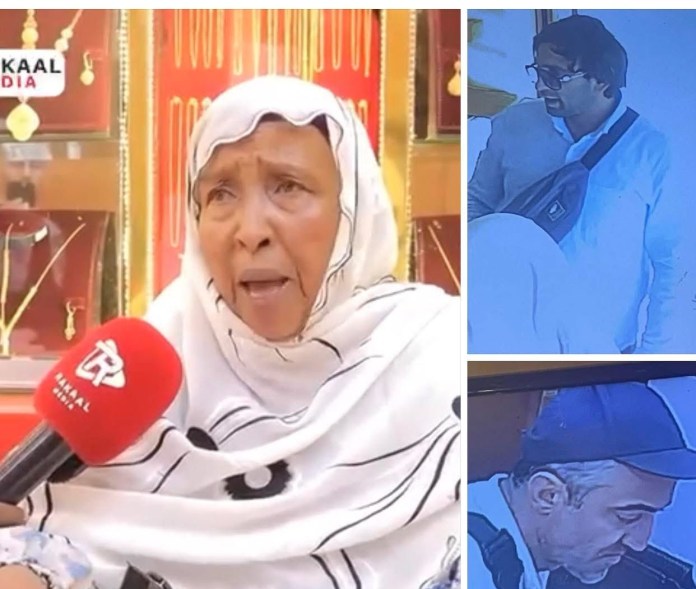
International Manhunt After Georgian Duo Accused of Robbing Elderly Woman in Hargeisa Gold Heist

0

HARGEISA, Somaliland – Authorities are pursuing an international manhunt for two Georgian nationals accused of a brazen theft in which $42,000 worth of gold was stolen from a 75-year-old woman in a Hargeisa market. The case, supported by CCTV evidence and immigration records, has sparked outrage and raised serious security concerns.

The victim, a grandmother reported to have invested a significant portion of her life savings in the gold, lost nearly her entire financial security in the incident. The theft of 340 grams of gold has sent shockwaves through the local trading community, where gold is a common store of wealth.

Clear surveillance footage captured the alleged theft. According to sources, the video evidence unmistakably identifies the two individuals removing the gold from the elderly woman. Authorities confirmed the suspects’ nationalities by cross-referencing the footage with passport and immigration data.

Investigators report that the suspects fled Hargeisa immediately after the incident, boarding a flight to Dubai. The rapid nature of their departure suggests a planned escape from local jurisdiction, though it is not yet known if the theft itself was premeditated.

The loss is catastrophic for the victim. In Somaliland, gold often functions as a primary savings mechanism and a hedge against economic instability, making this theft a severe personal and financial blow.

In response, vendors from Gobonimo Market—a central hub for gold and jewelry—are urging authorities to enhance security measures. They cite increasing thefts in crowded areas and are calling for improved surveillance, better stall security, and more frequent police patrols.

Somaliland officials now confront the complex challenge of recovering the stolen assets and seeking justice. The suspects’ flight to Dubai introduces diplomatic hurdles, as any potential extradition or legal cooperation with the United Arab Emirates will depend on international treaties and the formal presentation of evidence

Wadaag Bank: A Replica of Kenya’s Equity Bank

Wadaag Bank: A Replica of Kenya’s Equity Bank

By. Bashir Hagi Ali
1. EQUITY BANK, Kenya:
First, let’s take a closer look at Equity Bank in Kenya. Historically, Equity Bank in Kenya started in 1984 as Equity Building Society (EBS), focused on mortgage financing for low-income customers.
It was technically insolvent in 1993 but subsequently shifted its model toward microfinance and broader retail banking, which led to growth. It became a full commercial bank in 2004.
The bank is a subsidiary of Equity Group Holdings Plc, which is a financial services holding company. Equity Group’s operations are multi-country in East and Central Africa: Kenya, Uganda, Rwanda, Tanzania, South Sudan, Democratic Republic of Congo, plus a representative office in Ethiopia. Equity Group is publicly listed in Nairobi Securities Exchange (NSE) which is regulated by the Capital Markets Authority (CMA) of Kenya. ​The CMA is an independent public agency established by an “Act of Parliament” with the primary responsibility of supervising, licensing, and monitoring the activities of market intermediaries, including the Stock Exchange.
The Capital Markets Authority (CMA) of Kenya regulates the Nairobi Securities Exchange (NSE) through a comprehensive legal and regulatory framework designed to ensure an orderly, fair, and efficient market. Here’s a breakdown of how the CMA carries out its regulatory functions:
▪︎ Licensing and Supervision;
▪︎ Creating and Enforcing Regulations – The CMA develops and enforces a wide range of regulations and guidelines under the Capital Markets Act. These regulations cover various aspects of the market, including Public Offers (IPOs), Listing, Disclosure, Market Conduct and Corporate Governance;
▪︎ Investor Protection – a key mandate of the CMA is to protect investors. This is done through Promoting Public Awareness (the CMA conducts investor education to help the public understand the risks and opportunities of investing in the capital markets), ​Handling Complaints (the CMA provides a formal complaints procedure for investors who have issues with market intermediaries), and ​Investor Compensation (the CMA manages the Investor Compensation Fund, which provides a level of protection to investors in the event of a licensed firm’s failure);
▪︎ Enforcement – the CMA has the power to take enforcement action against individuals and entities that violate its regulations. This includes imposing fines, revoking licenses, and pursuing legal action.
​In essence, the CMA acts as the market’s watchdog in Kenya, ensuring that the NSE (Nairobi Stock Exchange) operates with integrity and that the interests of investors are protected. Its regulatory framework is designed to promote a fair, transparent, and secure environment for all participants.
Furthermore, equity bank is licensed under Kenya’s laws: Companies Act and Banking/Financial services regulatory regime. It is regulated by the Central Bank of Kenya (CBK).
Here’s how Equity Bank operates in practice:
Mission & Philosophy – the bank’s vision is to champion socio-economic prosperity of people of Africa. Key values include inclusion, convenience, flexibility, focusing on underserved populations.
Products & Services – the bank offers wide range of services: retail banking (savings, current accounts), loans (personal, business, MSME, mortgages), microfinance, investment services, insurance, foreign exchange, etc. Digital banking such as mobile app, online banking, and agent networks are also offered by the bank. Equity has invested heavily in digital channels. A large share of transactions are now digital.
Revenue Model – Earnings come from interest margin (loans vs what they pay for deposits & capital), plus non-interest income (fees, commissions, transaction charges).
Innovation & Social Impact – they have a separate foundation (Equity Group Foundation) to drive social programs: financial literacy, health, education, entrepreneurship etc. Also have product campaigns aimed at inclusion: services for low income, rural, women entrepreneurs etc.
Strengths & Challenges:
▪︎ Strengths – Deep reach/inclusion (bringing financial services to previously under-served populations.)
▪︎ Diversified presence regionally, so not wholly dependent on Kenya.
▪︎ Strong brand, strong digital infrastructure & innovation.
▪︎ Product diversity.
Challenges:
▪︎ Managing non-performing loans (credit risk);
▪︎ Fraud and operational risk as digital and agent networks expand;
▪︎ Keeping costs under control while maintaining large physical & agent networks;
▪︎ Regulatory challenges, e.g. adapting to stricter banking, fintech, tech risk guidelines;
Equity Bank (then Equity Building Society – EBS) became technically insolvent in 1993 because of a combination of structural weaknesses and an unsustainable business model at the time:
▪︎ Narrow Focus on Mortgage Financing:
In its early years (1984–early 1990s), EBS mainly provided long-term mortgage loans to low-income earners. But these customers had irregular or small incomes, and many could not meet repayment schedules. This led to high default rates and mounting non-performing loans (NPLs);
▪︎ Mismatch Between Deposits and Loans:
The society (EBS) relied on short-term deposits from members but issued long-term loans (mortgages). This created a liquidity mismatch—when depositors wanted their money back, EBS couldn’t easily recover it from borrowers tied up in long-term mortgages;
▪︎ Weak Governance & Systems:
At that time, EBS lacked robust corporate governance, risk management, and modern banking systems. Fraud, inefficiency, and poor financial controls worsened losses;
▪︎ Macroeconomic Conditions:
Early 1990s Kenya was facing economic turbulence: inflation, high interest rates, currency depreciation, and political uncertainty. Low-income clients (EBS’s main target group) were hit hardest, reducing their repayment ability;
▪︎ Capital Erosion:
Continuous loan defaults and operating inefficiencies meant the society was not generating enough income. Losses eroded capital reserves, so by 1993 it was technically insolvent—its liabilities exceeded its assets;
Instead of closing it down, the leadership (notably Dr. James Mwangi, who joined in 1993 as Finance Director) restructured the model. He shifted from just mortgages to microfinance-style retail banking. He Introduced savings products for small savers. He focused on financial inclusion. Later on, he digitized operations and expanded regionally. That transformation is what turned Equity bank from an insolvent building society into East Africa’s largest bank by customer base.
Did Equity Bank rely on equity capital from owners? Yes — but not in the typical “rich investors” sense. In the early 1990s, when it was still Equity Building Society (EBS), the institution was technically insolvent and could not raise big capital from conventional investors. Instead, it mobilized small contributions (equity capital) from its members/customers.
Each member who opened an account or joined the society was effectively a shareholder — a kind of mutual ownership model. This allowed it to rebuild capital from the grassroots up, using community savings as equity rather than depending only on external wealthy shareholders.
So the name “Equity” really emphasized fairness, ownership, and capital that is shared broadly (‘Wadaag’ in Somali).
How did the community and society become owners of the bank? This is where Equity’s model became revolutionary:
a) Mutual Society Origins:
As a building society, members were also shareholders. Depositors were given shares that gave them voting rights in governance. This was very different from conventional banks, which are usually owned by a few rich investors;
b) Democratization of Ownership:
As it transformed in the 1990s, Equity bank encouraged customers (farmers, small traders, teachers, civil servants) to buy small shares. By doing so, thousands of ordinary Kenyans became part-owners;
c) Employee Stock Ownership:
Equity bank introduced Employee Share Ownership Plans (ESOPs) to give staff real stakes. This aligned employees’ incentives with the bank’s success;
d) Public Listing:
In 2006, Equity bank converted from a mutual-style building society into a fully listed company on the Nairobi Securities Exchange (NSE). At that point, community members, small savers, and customers could buy shares directly in the bank, making it one of the most widely held institutions in East Africa;
e) Institutional Anchors:
To safeguard inclusivity, development investors (like Arise BV, partly backed by Norfund, FMO, Rabobank) later bought stakes — but the philosophy of community ownership and “bank for the people” remained central.
Why was this important?
▪︎ It gave legitimacy and trust: ordinary Kenyans felt “this is our bank”;
▪︎ It created resilience: instead of relying on a few investors who might pull out, Equity had a massive base of loyal shareholders and depositors;
▪︎ It fit the inclusion mission: the very people who were historically excluded from banking were not only customers but also owners.
In short, Equity Bank did rely on equity capital — but unlike conventional and elite-owned banks, it tapped into the community’s small savings and shareholding, gradually converting them into a broad ownership base. That’s how society itself became part-owner of the institution.
Timeline of Equity Bank Ownership Evolution:
◇ 1984 – Founding (Equity Building Society):
• Registered as a building society, mainly for mortgage lending to low-income earners;
• Ownership: Mutual model → depositors and members were also shareholders;
• Each member’s savings contributed to the “equity” capital base;
• Philosophy: fairness + community ownership (hence the name Equity);
◇ 1980s – Early 1990s: Struggles:
• Focused narrowly on mortgages for poor rural households;
• High default rates + liquidity mismatch → by 1993, technically insolvent;
• Ownership at this point: still member-based, but capital was eroded.
◇ 1993 – Turnaround Begins:
• Dr. James Mwangi joins as Finance Director;
• Strategy: Shift from just mortgages to microfinance + retail banking; Mobilize savings from ordinary people (teachers, farmers, traders).; and Rebuild trust by making customers also owners;
◇ Mid-1990s – Early 2000s: Community Ownership Deepens:
• Customers encouraged to buy small shares in the society;
• Thousands of ordinary Kenyans became shareholders;
• Introduced Employee Share Ownership Plans (ESOPs) to align staff with the bank’s mission.
◇ 2004 – Conversion to Commercial Bank:
• Equity Building Society officially becomes Equity Bank Kenya Ltd, a licensed commercial bank under the Central Bank of Kenya (CBK);
• Ownership: still heavily community-driven, with small shareholders and employees as co-owners;
◇ 2006 – Public Listing:
• Equity Bank lists on the Nairobi Securities Exchange (NSE);
• Shares become available to the public → customers, staff, and communities could directly own part of the bank;
• Becomes one of the most widely held companies in East Africa;
◇ 2010s – Regional Expansion:
• Equity evolves into Equity Group Holdings Plc, a parent company with subsidiaries in Kenya, Uganda, Rwanda, Tanzania, South Sudan, and later the DRC;
• Still emphasizes inclusivity in ownership: customers, employees, and international development investors;
◇ 2015 Onwards – Institutional Shareholders Join:
• Major investors like Arise BV (backed by Norfund, FMO, Rabobank) acquire stakes (~12–13%);
• Helps strengthen capital base for cross-border expansion;
• Ownership balance: Retail investors & customers (community roots); Employees (via ESOP); and Institutional investors (for capital stability);
â—‡ Today (2025):
• Equity Group Holdings is a publicly listed financial services giant with over 20 million customers;
•Still has one of the widest shareholding bases in Kenya;
• Operates as a hybrid model: rooted in community and employee ownership, supported by developmental institutional investors, and run as a modern listed company;
In summary:
◇ 1984–1993 → mutual/community model (members = owners);
◇ 1993–2004 → grassroots rebuilding, customers & employees become key owners;
◇ 2006 → listing democratizes ownership even more (public shares);
◇ 2010s–present → hybrid of public shareholders, community, employees, and institutional investors.
2. WADAAG BANK, Somaliland:
Now, let’s turn our attention to equity bank’s copycat in Somaliland called “Wadaag Bank”. The Somali word “Wadaag” itself means “Equity.” The bank is established in August, 2025 in Somaliland.
In a recent interview with the CEO of Wadaag Group, the parent company of Wadaag Bank, Mr. Abdirashid Baaxeer by MMTV, said the bank is planning to raise $20M equity capital from the public by issuing 20,000 shares with more than $1,000 per share. He also said that they’re soon planning to establish Wadaag Foundation (just like Equity Foundation). He indirectly hinted the fact that the bank has almost zero assets and so far solely rely on the $20M equity fund soon to be raised from the public.
On top of everything, Somaliland’s financial system lacks essential infrastructure to regulate and supervise one of the most important component of financial system – direct financing or financial markets. There are no acts, laws and bodies for the regulation and supervision of financial market transactions in Somaliland, be it debt or equity market activities. The Stock Market is missing, and there are no financial market authority and acts.
Moreover, so far, it is not clear to the public how Wadaag Bank managed to come up with one of the highest stock valuation in the history of finance, banking, and markets with more than $1,000 per share when it has so far zero performance and track records in revenue, assets, income and overall operations. In addition, there are also many challenges and risks facing the bank in generating revenue and income for it’s shareholders. High competition in banking sector in SL, limited products and services, high inflation, low income, limited financial inclusion, fraud, inefficiency, high default rates, and lack of documentations among others
Wadaag Banks’s ownership and governance structure is similar to that of Equity Bank in Kenya with a little differences. Instead of making the banks’s depositors shareholders, Wadaag Bank started to directly go to public with zero track records and performance, raising $20m by selling 20,000 shares to the public, what a joke and drama!
CONCLUSION & SUGGESTION:
This is clearly a huge systematic risk in our financial system. Therefore, until proper regulations and bodies for financial market activities in SL, such as financial markets authority and financial markets act, are put in place, Somaliland government should immediately halt all activities and transactions related to direct financing activities particularly financial market transactions in Somaliland before it’s too late.
Many thanks for the undivided attention and longanimity to read the long piece. It took me more than 2 hours to put it together, and it took you 15 minutes to read it. You’re welcome!
Bashir Hagi Ali
(BSc, MSc, and MBA in finance and banking)
Hargeisa, Somaliland.


The Crisis and Power Struggle Within the Kulmiye Party: An Analysis of the Stalled September 25th Convention

0

The administration of Abdirahman Irro is fundamentally opposed to holding the Kulmiye party’s long-promised national convention, fearing it would become a platform for a strong and organized opposition within the party.

This issue has culminated in a conflict between three distinct factions, each with its own agenda:

  1. The Party Leadership: The Chairman and Vice-Chairman of the Kulmiye party have agreed not to hold any convention and to prevent any internal changes. They share the perspective of former members of the previous, ousted administration.
  2. The Habar Awal Elders: This group has intervened and is positioning the party chairman in the Sahil region. Their goal is to restore the unity and power of the clan, ensuring the party has a strong foundation. They argue that discussions about the party’s presidential and vice-presidential candidates should only happen after the party’s power is restored, as the current leadership lacks legitimacy. The party’s reformist movement is primarily driven by the elders of this clan.
  3. The Cirro Administration: This faction is unanimously opposed to the party returning to its former, more powerful structure. They aim to block any reform movement within the Kulmiye party and oppose any convention that would announce support for the reformists.

These three factions, each steadfast in its principles, have clashed repeatedly at the negotiation table. No consensus has been reached, as each side appears to prioritize its own interests over the common good.

What is the Core Disagreement?

  1. The party leadership is being pressured to make concessions for the sake of unity and to restore the party’s strength.
  2. Traditional leaders from the Habar Je’lo and Samale sub-clans oppose the current chairman, Mohamed Farah, who is not even a member of the party’s central committee, leading the party. They are maneuvering to control the party’s leadership.
  3. There is a push to hold Abdicasis Samale accountable for the interests he has compromised and to question what he can realistically offer the public of Somaliland, given his perceived narrow focus.

A Proposed Solution

The convention that the elders of the Habar Awal clan fear is actually the appropriate forum to resolve these issues. The timing is right. If the current party leaders continue to delay talks, the clan elders will rally to convene the convention themselves and declare a principle that unifies the Kulmiye party community, without further delay.

Analysis and Potential Resolutions:

  1. If Mohamed Farah’s Isa Musa sub-clan is united and without internal dispute, I believe he could be a compassionate and effective party chairman.
  2. The Habar Je’lo should prioritize the common good over their specific interests.
  3. Abdicasis Samale should be confronted and held accountable for the damage done to the party’s interests and for what he can genuinely deliver to the people of Somaliland, given his limited vision.

Somaliland Deputy Speaker Presents EU Resolution Seeking Recognition; Envoy Stresses Path to Peace

0

In a significant escalation of its campaign for international legitimacy, the Republic of Somaliland’s Second Deputy Speaker, Ali Hamud Jibril, submitted a pivotal resolution to the European Parliament today calling for its formal recognition.

The document, presented during a high-stakes plenary session in Brussels, outlines Somaliland’s case for statehood, citing its record of democratic elections, economic self-sufficiency, and effective counter-terrorism efforts. The resolution notes that these milestones were achieved despite decades of international isolation and without substantial foreign aid.

Somaliland’s EU Envoy, Ambassador Mohamed Kaiser, who accompanied Jibril, delivered a strong appeal for European endorsement. “Somaliland stands as a beacon of stability in a turbulent Horn of Africa, deserving not just sympathy but sovereignty,” Kaiser declared. He pointed to recent diplomatic overtures from the United States and a strategic pact with Ethiopia as indicators of a shifting international perspective.

Kaiser warned that delaying recognition risks emboldening irredentist claims from Somalia and could further destabilize critical Red Sea trade routes.

The resolution follows Jibril’s recent tour of Nordic and Benelux capitals, where he reportedly garnered tentative support from lawmakers. If adopted by the European Parliament, the measure could pressure the EU’s External Action Service to prioritize Somaliland in regional dialogues, potentially unlocking new trade and development agreements.

With global attention turning to the upcoming UN General Assembly, Kaiser’s closing argument resonates: “Recognition is the key to unlocking peace, not a barrier to it.”

Somaliland President Holds Strategic Talks with Senior U.S. Military Command Officials

0

By Goth Mohamed Goth

HARGEISA, Somaliland – The President of the Republic of Somaliland, H.E. Abdirahman Mohamed Abdillahi (Irro), held a high-level strategic meeting on Tuesday with senior officials from the United States Africa Command (USAFRICOM).

The discussions focused on strengthening security cooperation, enhancing bilateral ties, and addressing regional stability in the Horn of Africa.

President Irro welcomed the delegation to Somaliland and emphasized the nation’s strategic importance as a reliable partner for peace and security. The talks covered key areas for collaboration, including bolstering regional security mechanisms and deepening the partnership between Somaliland and the United States.

“The President underscored Somaliland’s vital role in promoting peace and stability throughout the Horn of Africa,” a statement from the President’s office noted. “He reiterated that Somaliland has been a responsible and democratic entity for over three decades, actively contributing to security, social development, and peaceful coexistence in the region.”

President Irro also acknowledged and appreciated the support from U.S. legislative bodies towards Somaliland’s cause, noting a positive evolution in U.S. foreign policy regarding the region.

In response, the senior U.S. military officials praised Somaliland for its enduring security and stability. They recognized its critical role in safeguarding maritime and territorial security and committed to enhancing bilateral cooperation further, particularly in the areas of security, training, and technical support.

The meeting signifies the continued and growing engagement between Somaliland and international partners on matters of regional security and cooperation.