


REPORT ON THE SOMALILAND2NDAFRICAN CHILD CONFERENCE
Venue: Ambassdor Hotel, Hargeisa
Date: June 18, 2026
THEME OF THE YEAR 2026
Advancing children’s rights through participation and protection in Somaliland
Conference Overview
The Somaliland 2nd African Child Conference convened government institutions, development partners, civil society organizations, academia, the Child Parliament, religious leaders, traditional elders, and international partners to strengthen collaboration in advancing child rights and welfare. The conference provided a platform for dialogue, policy review, knowledge sharing, and partnerships to address key challenges affecting children in Somaliland and across Africa.
Participants reaffirmed their commitment to the principles of the African Charter on the Rights and Welfare of the Child, the United Nations Convention on the Rights of the Child (UNCRC), and Somaliland’s national legal and policy frameworks. While acknowledging progress in education, healthcare, child protection, social welfare, and juvenile justice, the conference recognized continuing challenges, including poverty, climate change, displacement, child labor, gender inequality, violence against children, limited access to quality services, and insufficient investment in child-focused programs.
The conference emphasized that investing in children is essential for sustainable development, peace, and social cohesion. It highlighted the importance of ensuring inclusive and equitable opportunities for all children, particularly girls, children with disabilities, internally displaced children, and those living in underserved communities. Participants also stressed the need to strengthen child participation in decision-making processes, improve access to quality education and healthcare, enhance nutrition and social protection systems, and create safe environments where every child can thrive.
A key outcome of the conference was the recognition that stronger coordination among government ministries, local authorities, civil society organizations, development partners, communities, and children themselves is critical for the effective implementation of child-centered policies and programs.
The conference concluded with a collective commitment to:
Strengthen child protection systems and enforce child rights legislation.
Increase investment in education, health, nutrition, and social protection.
Promote meaningful child participation in governance and development.
Enhance partnerships among government, civil society, academia, and international organizations.
Improve data collection, monitoring, and accountability for child-focused initiatives.
Accelerate progress toward the Sustainable Development Goals (SDGs) and Agenda 2040: Africa’s Agenda for Children.
The Somaliland 2nd African Child Conference reaffirmed that every child has the right to protection, quality education, healthcare, participation, and equal opportunities. It called on all stakeholders to translate these commitments into concrete actions to ensure that no child is left behind, thereby contributing to a peaceful, inclusive, and prosperous Somaliland and Africa. 
OPENING REMARKS
 Sabaad,Director Department of Gender and Family, Ministry of Labor, Social Affairs and Family
warmly welcomed parents, university representatives, government officials, NGOs, and other participants to the conference. Addressing the children, she emphasized that the event was dedicated to celebrating them, encouraging them to enjoy the day while reminding all attendees that the conference was also an opportunity to learn from children’s voices and experiences. Her remarks underscored the importance of recognizing children as active participants in promoting and protecting their rights.
“Today is your day. We celebrate you, listen to your voices, and reaffirm our commitment to protecting your rights and empowering your future.”

Mohamed Abdi Hashi, Director General, Ministry of Labour, Social Affairs and Family.
In his opening remarks, Director General welcomed all participants and expressed his appreciation for the presence of government officials, development partners, civil society organizations, academia, religious leaders, traditional elders, and child representatives. He emphasized that the 2nd Somaliland African Child Conference represented an important milestone in strengthening national efforts to promote and protect the rights of children.
The Director General provided a strategic overview of the conference’s objectives, noting that it was designed to assess the progress made since the first conference, measure accountability for previous commitments, and identify priorities for the next year and future action. He highlighted the importance of translating commitments into practical outcomes that improve the lives of children across Somaliland.
He reaffirmed the Ministry’s commitment to working collaboratively with all stakeholders to strengthen child protection systems, promote meaningful child participation, and ensure that every child enjoys their rights in a safe, inclusive, and supportive environment. He concluded by calling on all participants to engage actively in the discussions and contribute to developing practical recommendations that will advance child rights and welfare in Somaliland.
“This conference marks our shared commitment to turn promises into action and ensure every child in Somaliland enjoys a safe, inclusive, and rights-based future.”
 Insight’s from International Partners & Civ l Society
Key insights
UNICEF Representative Ms. Sandra Lattouf ( Delivered Online)
Sandra reaffirmed UNICEF’s strong commitment to supporting the rights and wellbeing of children in Somaliland. She acknowledged progress made in the health and education sectors while emphasizing that sustained efforts are needed to strengthen child protection systems and prevent violence, abuse, and exploitation. She stressed that meaningful collaboration among government, development partners, civil society, and communities is essential to creating a safe, inclusive, and nurturing environment where every child can survive, learn, develop, and thrive.
“Our shared responsibility is to strengthen child protection systems and create an environment where every child in Somaliland can thrive.”
Save the Children Representative Abdinasir Sahal
Abdinasir expressed appreciation to MoLSAF for organizing the conference and highlighted Save the Children’s continued commitment to supporting health, education, and WASH programs. He emphasized the importance of stronger partnerships, including private sector engagement, to expand and sustain social services for children.
“Protecting and investing in children requires collective action, where government, partners, and the private sector work together to expand essential services.”
UN Team Representative Khalid
Khalid emphasized the need for a strategic shift toward more inclusive, effective, and sustainable approaches in child-focused programs. He highlighted that Somaliland’s future depends on today’s commitment to investing in children, particularly those who are vulnerable and at risk of being left behind, by ensuring protection, inclusion, and equal opportunities for all.
“The future of Somaliland will be shaped by the investments we make today to ensure every child is protected, included, and given equal opportunities.”
Ms. Tiana, British Office, Hargeisa, Somaliland
Tiana highlighted the importance of a child-centered approach that recognizes the strong link between maternal health and children’s well-being. She acknowledged the valuable contributions of the Children’s Parliament and emphasized that discussions and commitments must lead to real improvements in children’s lives. She called for continued efforts to address gaps in access to essential healthcare and education, particularly for children who remain underserved.
“Our commitments must go beyond words; they must create real change in the lives of children by ensuring access to health, education, and opportunities for every child.”
Insights from Child Voices
Mawada Member of the child parliament (Moderator child Session)
The Children’s Parliament session represented a significant milestone in the conference, providing children with a direct platform to express their views and engage with national leadership. Moderated by MAWADA, the session emphasized the importance of meaningful child participation and highlighted the need to empower girls and women as leaders in building a future based on equality and equal opportunities.
“Meaningful participation gives children a voice today and empowers future generations to create a more equal society.”
Voices from the Children’s Parliament
The Children’s Parliament session provided a powerful platform for children to share their experiences, challenges, and recommendations directly with national leaders. Their contributions highlighted key priorities including education, healthcare, child protection, climate action, and inclusion of children with disabilities.
Fatima (Speaker of the Children’s Parliament):
Fatima emphasized the importance of children’s participation in decision-making processes. She explained that the mission of the Children’s Parliament is to collect children’s views and ensure their voices reach leaders, calling for equal access to education, healthcare, protection from violence, and meaningful participation.
“Children’s voices must be heard and reflected in decisions that shape their future.”
Anas (Health Advocate):
Anas shared his personal experience living with Type 1 Diabetes, highlighting the challenges children face in accessing essential healthcare and medication. He stressed the need for stronger health support systems so that chronic illnesses do not prevent children from learning and enjoying their childhood.
“Every child deserves access to the healthcare they need to learn, grow, and live with dignity.”
Mustapha (Climate & Environment Advocate):
Mustapha highlighted the impact of climate change on children and communities, advocating for environmental protection through tree planting, clean energy solutions, and stronger climate adaptation efforts.
“Protecting the environment today means protecting the future of children tomorrow.”
Hayat (Inclusion & Disability Advocate):
Hayat raised important concerns about the barriers faced by children and persons with disabilities, including limited access to education, inadequate infrastructure, and lack of communication support. She called for inclusive policies, accessible environments, and equal opportunities for all children.
“Inclusion means removing barriers and ensuring every child has the opportunity to participate and succeed.”
Ministries key Speeches
Minister Yonis Ahmed Yonis, Ministry of Justice
Minister Yonis congratulated Minister Milgo and MoLSAF for organizing the conference and reaffirmed the Ministry of Justice’s commitment to protecting children’s rights. He highlighted the continuation of free legal aid services for children in conflict with the law and emphasized the importance of strengthening the Children’s Parliament as a platform to prepare young people for future leadership and civic responsibility.
“Investing in children today means preparing responsible leaders for tomorrow, while ensuring every child has access to justice and protection.”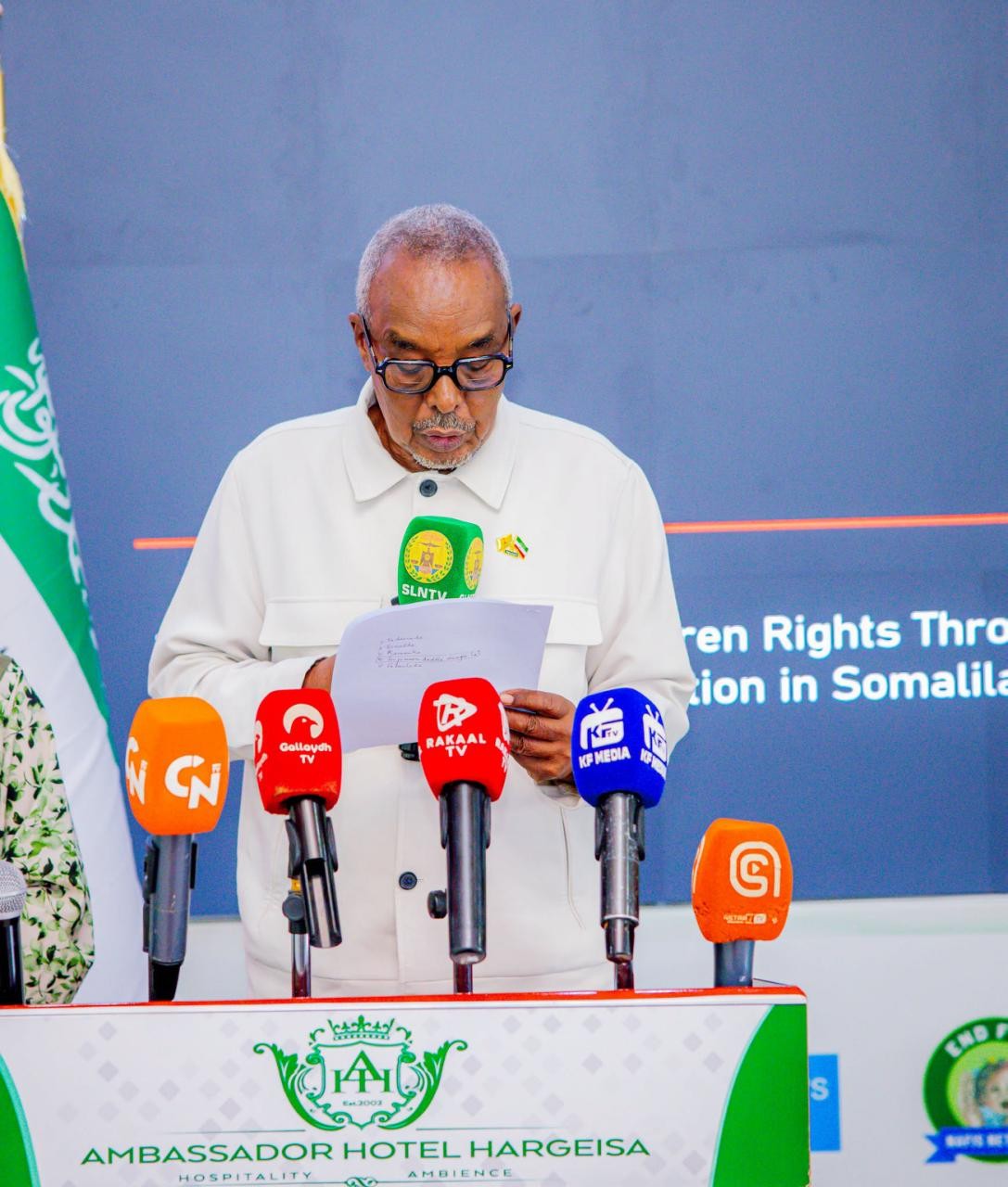
Deputy Minister Dahir, Ministry of Health Development
Deputy Minister reaffirmed the Ministry of Health’s commitment to improving child health outcomes by prioritizing nutrition, expanding vaccination programs, and strengthening preventive healthcare services. He addressed the importance of responding to the Measles outbreak through increased awareness and vaccination efforts, while also highlighting the need for inclusive health services through the introduction of Sign Language interpretation within the health sector service providers. He encouraged the Children’s Parliament to become active partners in promoting healthy lifestyles, hygiene practices, and community awareness starting from families and local communities.
“Protecting every child’s health requires strong nutrition, timely vaccination, inclusive healthcare, and shared responsibility from families, communities, and children themselves.”
Prof, Ismail Du’ale Yousuf, Minister of Education and Science
The Minister reaffirmed the government’s commitment to ensuring that every child has access to quality and inclusive education. He announced that a specialized curriculum for children with disabilities is now ready, marking an important step toward making schools more inclusive. Emphasizing that children learn best when they are healthy, he also revealed plans for a Memorandum of Understanding (MoU) between the Ministries of Education and Health to introduce school-based health services, helping students receive the support they need to succeed both in the classroom and in life.
“Every child deserves inclusive, quality education, and by connecting education with health, we can give every learner the opportunity to reach their full potential.”
Sheikh Abdilahi Dahir Jama (Bashe), Minister of Ministry of Religion and Endowment
The Minister emphasized that protecting children is a shared responsibility of families, communities, religious leaders, and public institutions and also, he warned about the growing risks associated with the misuse of social media and encouraged parents to actively guide and supervise their children’s through oversight engagement. He also called for the elimination of corporal punishment in homes and schools, advocating instead for parenting and educational approaches rooted in compassion, dignity, and positive discipline.
“Protecting children means guiding them with care, shielding them from harmful influences, and raising them through respectnot violence.”
Ms. Marwo Milgo Maxamed Cilmi (Sanbaloolshe), Minister of Labour, Social Affairs and Family
Minister Milgo emphasized that children’s rights, participation, and well-being must remain at the heart of national development efforts. She recognized the importance of creating spaces where children can express their views and influence decisions that affect their lives, highlighting the Children’s Parliament as a successful example of meaningful child engagement and empowerment.
She appreciated the continued support and commitment of national leadership toward advancing the welfare of women and children and reaffirmed MoLSAF’s dedication to strengthening child protection and social inclusion systems. She further committed to working closely with the Ministry of Health to improve accessibility for children and persons with disabilities by supporting the training of healthcare professionals in Sign Language, ensuring that essential services reach all members of society without barriers.
The Minister also addressed the role of families and communities in shaping children’s future, encouraging parents to move beyond traditional practices where children’s opinions are overlooked. She called for a cultural shift toward listening to children, respecting their perspectives, and involving them in conversations and decisions that contribute to their growth, dignity, and future opportunities.
“Children are not only the future; they are voices of today. We must listen to them, respect their views, and ensure that our services and decisions include every child without barriers.”
Final Remarks and Conclusions of the event
The closing of the Somaliland 2st African Child Conference marked a historic milestone in Somaliland’s commitment to children’s rights and wellbeing. His Excellency Mohamed Aw Ali Abdi, Vice President of Somaliland, delivered the closing remarks.
H.E. Mohamed Aw Ali Abdi, Vice President of Somaliland, highlighted the importance of translating the discussions and commitments of the conference into practical actions that create lasting improvements in the lives of children.
The Vice President appreciated the contributions of all participants and called on the media to play a stronger role in raising public awareness by giving greater visibility to child rights issues and the outcomes of the conference. He expressed his admiration for the Children’s Parliament, recognizing it as a powerful example of children’s participation and leadership. He emphasized that children should not only be consulted but should also be given opportunities to engage with national institutions, suggesting that the Children’s Parliament could participate as observers in the National Parliament to strengthen their understanding of leadership, governance, and civic responsibility.
On gender equality and girls’ empowerment, the Vice President highlighted the positive transformation taking place among young girls in Somaliland. He emphasized that “the girls of today are not the girls of the past,” encouraging girls to continue advancing in education, confidence, and leadership roles. He reaffirmed the importance of creating an environment where girls have equal opportunities to contribute to society and shape the future.
Regarding Water, Sanitation, and Hygiene (WASH), the Vice President reaffirmed the government’s commitment to prioritizing access to clean water, hygiene, and education within national development planning and budgeting. He stressed that access to clean water and proper hygiene are essential foundations for children’s health, dignity, and survival, emphasizing that “without hygiene, there is no life.”
Addressing parenting and child protection, the Vice President called for a change in attitudes and practices toward children. He urged families and communities to end child neglect and prevent situations where children are left without proper care and support. He encouraged parents to move away from threats and physical punishment and instead adopt positive parenting approaches based on communication, guidance, love, and understanding. He emphasized that spending time with children and listening to them is essential for developing their confidence, abilities, and future potential.
The Vice President’s closing message reflected a broader vision of a Somaliland where children are protected, respected, included, and empowered to become future leaders and contributors to national development.
“A nation’s future is built through the care, education, and empowerment of its children. When we listen to children, protect them, and invest in their potential, we build a stronger Somaliland for generations to come.”


